Digital · Reception
Digital terrestrial TV in the UK, from ONdigital to Freeview and the digital switchover
TV reception advice had to change once Britain's aerials began to pick up digital signals. This guide follows digital terrestrial TV from the multiplex licences of the 1996 Act, through the rise and collapse of ONdigital, to the launch of Freeview and the end of analogue television in 2012.
- Nov 1998ONdigital goes on air
- 27 Mar 2002ITV Digital in administration
- 30 Oct 2002Freeview launches
- 98.5%Freeview coverage after switchover
01How digital terrestrial TV was…
How digital terrestrial TV was licensed
Digital terrestrial TV in Britain rested on the first Part of the Broadcasting Act 1996. Section 1 defined a multiplex service as the broadcasting of two or more services combined in digital form, and a digital programme service as a channel of programmes meant for that kind of broadcast. The Independent Television Commission granted both kinds of licence for the commercial side of the system.
Before awarding a multiplex licence, the ITC had to publish a notice under section 7 naming the frequencies, the areas of the country they would reach, the closing date for applications and the fee. Every licence holder also had to be a fit and proper person under section 3. A single multiplex, BBC News explained in 2002, gave its holder room for four or more digital channels.
The arrangement split the work in two. Multiplex operators ran the digital capacity and the transmissions; channel providers held their own programme licences and paid to be carried. Companies that already held Channel 3 and other ITC licences could apply for either role. ONdigital, the pay service backed by two ITV companies, held three of the commercial multiplex licences until it handed them back in 2002.
From ONdigital to Freeview and switchover
The main dates for digital terrestrial TV in the UK, taken from BBC News reports of the time, a ministerial answer in Hansard and the government's announcement at the end of switchover. The ITC took the licensing decisions up to December 2003; the switch-off dates fall in the Ofcom years.
- 1998
ONdigital goes on air
The pay service launches in November, owned in equal shares by Carlton and Granada. - 2002
Administration
On 27 March the High Court places ITV Digital, as ONdigital had been renamed, into administration. - 2002
Licences surrendered
On 30 April ITV Digital hands its multiplex licences back to the ITC, and its pay service collapses in May. - 2002
The ITC decides
On 4 July the Commission chooses the free-to-air bid from the BBC and Crown Castle. - 2002
Freeview starts
The new service goes live at 0600 GMT on 30 October with about 30 free channels. - 2007
First switch-off
Whitehaven in Cumbria loses BBC Two in analogue on 17 October, the first UK town to switch. - 2012
Switchover ends
The last analogue signals go off in Northern Ireland overnight into 24 October.
DIGITAL TERRESTRIAL TV IN SEVEN DATES
- NOV 1998
- ONdigital goes on air
- 27 MAR 2002
- ITV Digital goes into administration
- 30 APR 2002
- Licences surrendered
- 4 JUL 2002
- BBC and Crown Castle chosen
- 30 OCT 2002
- Freeview starts, about 30 free channels
- 17 OCT 2007
- Switchover begins in Whitehaven
- 24 OCT 2012
- Last analogue signals switched off
Why ONdigital failed
ONdigital went on air in November 1998 as a subscription service, owned half each by Carlton and Granada, two of the largest ITV companies. It later took the name ITV Digital. By March 2002 it had about 1.3 million subscribers and was thought to be losing around £1 million a day, according to BBC News.
The heaviest burden was football. A three-year deal to show Football League matches cost £315 million, and the audiences never matched the price. When the broadcaster said it could not pay the £180 million it owed the League, the two sides failed to agree a compromise. On 27 March 2002 the High Court put ITV Digital into administration, and two partners from Deloitte and Touche took over running it.
No buyer was found. The licences were surrendered on 30 April 2002, a minister confirmed in a written answer to the Commons, and the collapse in May left hundreds of thousands of viewers without a working pay service and cost more than 1,000 jobs. The Culture Secretary, Tessa Jowell, insisted at the time that it was not the end of digital terrestrial TV in the UK.
How Freeview replaced ITV Digital
The ITC advertised the three surrendered licences again and received six applications from four groups of bidders. ITV and Channel 4 offered a mix of free channels and low-cost pay television. The BBC and the transmitter company Crown Castle proposed a service that would be entirely free to view, carrying some channels from BSkyB. On 4 July 2002 the Commission chose the BBC and Crown Castle, a result Greg Dyke, the BBC's director general, called a fresh start.
Freeview went live at 0600 GMT on 30 October 2002 with little fanfare. It offered about 30 television channels at no charge, plus digital radio stations, and could be watched with a new set-top box costing £99, an old ITV Digital box or an integrated digital television. BBC News reported that about three-quarters of homes could receive it, though some households would need to upgrade their aerials at their own cost.
Many of the channels had already been on air for months. BBC News listed free digital channels such as BBC Choice, BBC Four and ITV2, with Sky Travel, Sky News, Sky Sports News and UK History among the newer names; some, including F tn, were not due until the following January. Analysts quoted by BBC News saw BSkyB as the biggest commercial winner, since three of its channels were bundled into the winning bid. The BBC said the long-term aim was to reach up to 10 million households that did not want pay television.
TV reception advice for Freeview today
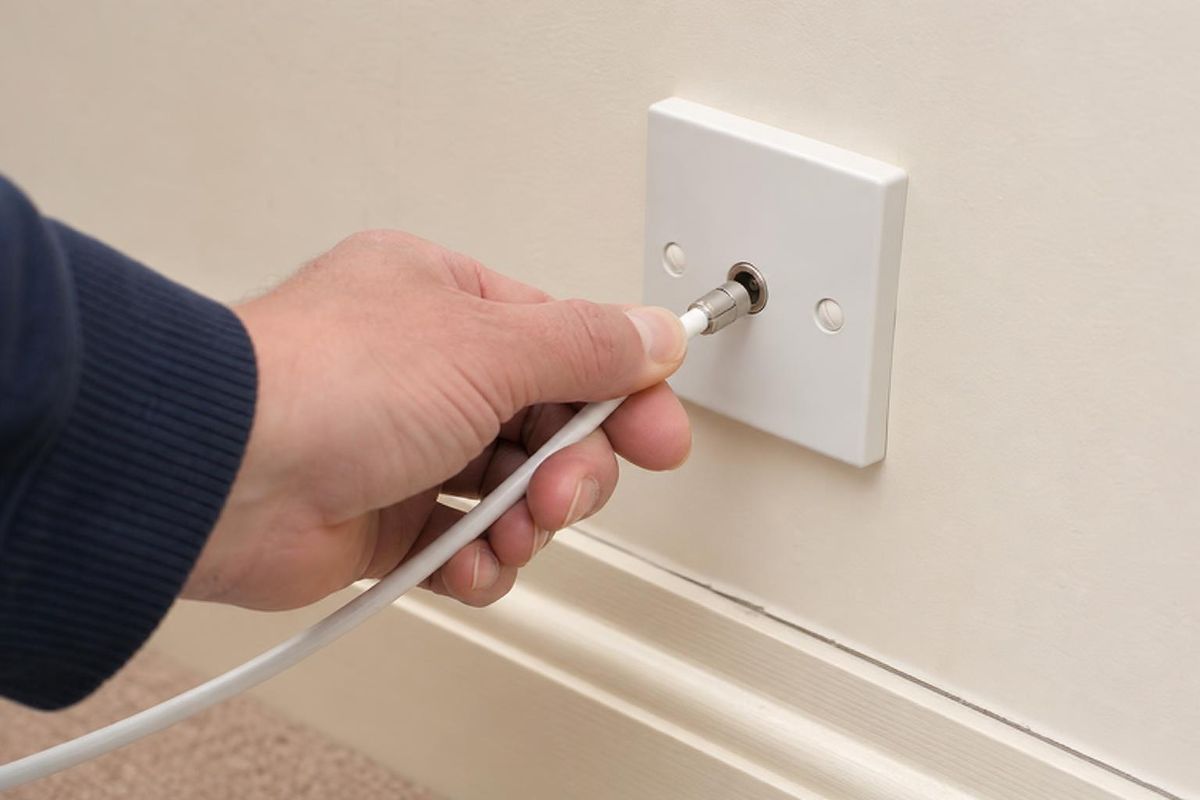
Practical TV reception advice now comes from the platform and the broadcasters, not from a regulator. The checks below, for a home aerial and a Freeview set or box, follow the order suggested by the help pages of Freeview and BBC Reception Advice.
- 1
Check what you should receive
Freeview's channel checker predicts which channels should be available at your address, so you know whether a missing channel is a fault or simply out of range. - 2
Look for transmitter work
The BBC publishes works and warnings for each transmitter. Planned maintenance or a fault can cut signals across a whole area for hours. - 3
Retune the set
Picture break-up, missing channels or the wrong regional news can mean the television needs a manual retune. The BBC publishes step-by-step retuning guides. - 4
Check the aerial and cable
A damaged cable, a loose plug or an aerial knocked out of line by wind can look like a transmitter fault. If the earlier checks find nothing, an aerial installer can test the signal. - 5
Allow for the weather
Spells of high pressure and bad weather can both disturb Freeview reception for a while. BBC Reception Advice has a separate guide to each effect.
Satellite and cable viewers should go to their platform or retailer, not the terrestrial help pages, because their signal reaches the home by a different route. For a complaint about what is broadcast rather than how it arrives, see how to complain about a TV programme.
The digital switchover, 2007 to 2012
The digital switchover began in Whitehaven, Cumbria, which BBC News named as the first UK town to lose its analogue signal. BBC Two went first, on 17 October 2007. The county council set up a panel to check the help given to elderly, disabled, blind and partially sighted residents, and trading standards officers watched firms selling aerial upgrades and digiboxes.
Region by region, the analogue transmitters went dark over the next five years. The last signals were switched off in Northern Ireland overnight into 24 October 2012. The government said the project had finished on schedule and under budget, with the help scheme led by Digital UK and the BBC and with Arqiva re-engineering 1,154 transmitter sites.
By then the regulator had changed. The ITC licensed the early multiplexes, but Ofcom had taken over its duties on 29 December 2003, years before the first switch-off. The completed digital switchover extended Freeview coverage to 98.5 per cent of the population, reached an extra 4 million homes and cleared spectrum that, the government said, could now be auctioned for 4G mobile broadband. The wider story of the Commission sits in the ITC timeline.
Questions about Freeview, ONdigital and digital terrestrial TV
The first pay service, ONdigital, went on air in November 1998 under multiplex licences granted by the ITC under the Broadcasting Act 1996. It was owned in equal shares by Carlton and Granada.
ONdigital was renamed ITV Digital and went into administration on 27 March 2002, weighed down by a £315 million Football League deal. It surrendered its licences on 30 April 2002, and the pay service collapsed in May.
The Independent Television Commission. On 4 July 2002 it picked the free-to-air bid from the BBC and Crown Castle, which carried some BSkyB channels, over three rival groups.
Freeview launched at 0600 GMT on 30 October 2002 with about 30 free channels. A new set-top box cost £99, and old ITV Digital boxes also worked.
The digital switchover started in Whitehaven on 17 October 2007 and finished in Northern Ireland overnight into 24 October 2012, when the last analogue signals went off.
For Freeview problems, use the Freeview help pages and BBC Reception Advice, which has a transmitter checker and retuning guides. Satellite and cable viewers should contact their provider.
Sources 11
- Broadcasting Act 1996, section 1 (legislation.gov.uk)
- Broadcasting Act 1996, section 7 (legislation.gov.uk)
- BBC News, ITV Digital goes broke, 27 March 2002
- Hansard, written answer, ITV Digital, 25 June 2002
- BBC News, Digital TV licence battle nears end, 4 July 2002
- BBC News, Digital TV losers assess their prospects, 4 July 2002
- BBC News, Freeview's fresh start for digital TV, 30 October 2002
- BBC News, Panel monitors digital switchover, 8 October 2007
- GOV.UK, On time and under budget, an all-digital UK, 24 October 2012
- Freeview help
- BBC Reception Advice
Read next